Posted at: July 10, 2026
A Conversation with Wade Clapp, MD, Outgoing Pediatrics Chair
Discovery, Service and Hope: A Conversation with Wade Clapp, MD
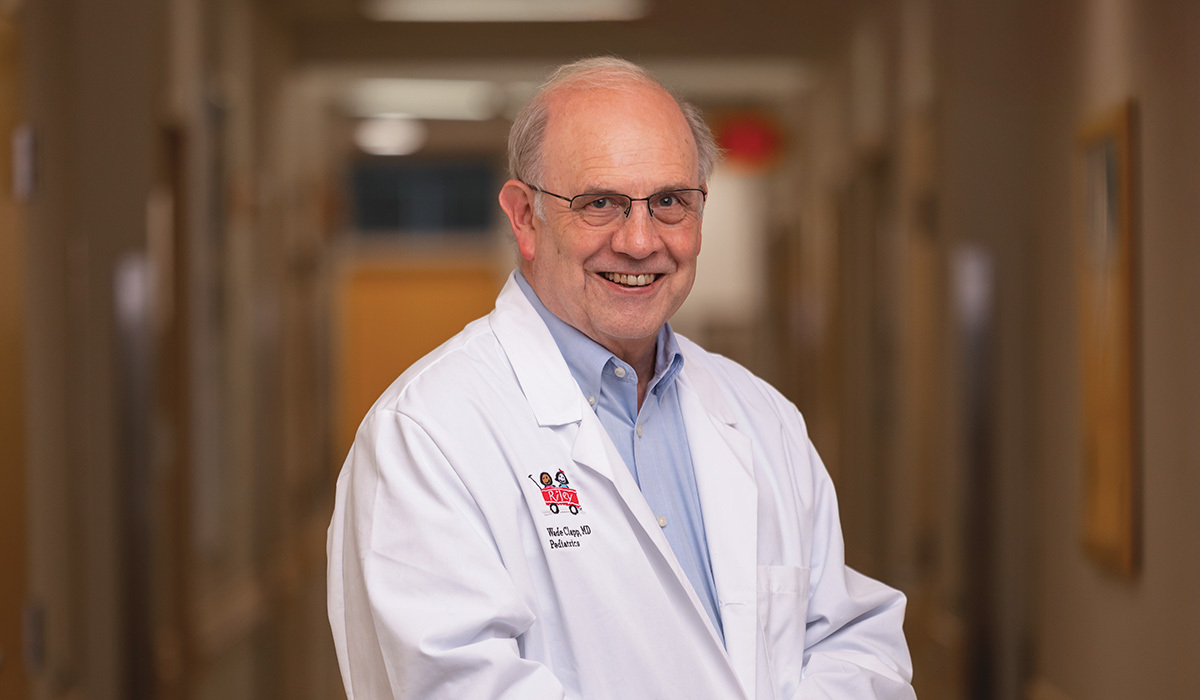
Whether or not you realize it, you can’t walk through the halls of Riley Hospital for Children today without being impacted by the life’s work of D Wade Clapp, MD.
Soon Dr. Clapp will step down as chairman of the Department of Pediatrics at IU School of Medicine — a role he's held since 2009 — to focus on his research. He will continue to serve IU School of Medicine as senior associate dean for entrepreneurial research and commercialization.
We asked Dr. Clapp to reflect on his legacy of advancing hope for children and the work still ahead.
When you started studying the disease neurofibromatosis, also known as NF1, there were no effective treatments to address the tumor growth it caused. What kept you inspired and motivated?
I will always remember the Thanksgiving morning when I was in the lab doing cell culture work. The phone rings in my office, and it’s a mother from California. She said, “I’ve been reading about your work. Is there anything you might have?” She had a 3-year-old daughter, Emily Hampton, who had NF1 and had a tumor pressing against her airway. There were no treatment options. The tumor was vascular in nature, so surgery wasn’t a good option. They had been to three different health centers, and Emily’s mother asked what she should do if her daughter stopped breathing. They told her, “Well, call an ambulance.”
We had just identified a potential drug, Gleevec, and were able to start Emily on it. Three months later, her tumor had shrunk by about 70%. The family stayed in touch over the years and shared their story with Riley Children’s Foundation. Emily graduated from high school a couple of years ago and is now in college.
What feeling does it give you to know your research has made such an impact?
Grateful. I feel grateful because you really come to know the families. You hear their urgency, and they’re reaching out for hope. And you're always just grateful to be able to help. But it’s not like the battle’s over. While we’ve had great success, there is always more work to be done.
How much has the Riley/IU School of Medicine pediatric research program grown during your tenure?
Our funding from the National Institutes of Health (NIH) has increased fourfold, from about $12 million in 2009 to $48 million. And that’s just a portion of our total research budget, which is now about $115 million annually. That scale allows us to impact children’s health far beyond Indiana.
I can’t overstate how this never would have happened without Riley Children’s Foundation and the Dance Marathon program. That support allows us to sustain our research during dips in federal funding. Those resources have just been foundational.
What are Riley’s greatest needs moving forward, and where can philanthropy help?
Recruitment and retention of talented physicians remain critical. Fewer medical graduates are entering pediatrics, and even fewer are pursuing subspecialties or research. There are real economic barriers such as medical school debt and the risky nature of research careers. Philanthropy can help offset those pressures.
Additionally, hospital revenue alone cannot sustain innovation. A large portion of pediatric patients are covered by Medicaid, and philanthropy is essential to advancing research and care.
What will your next chapter focus on?
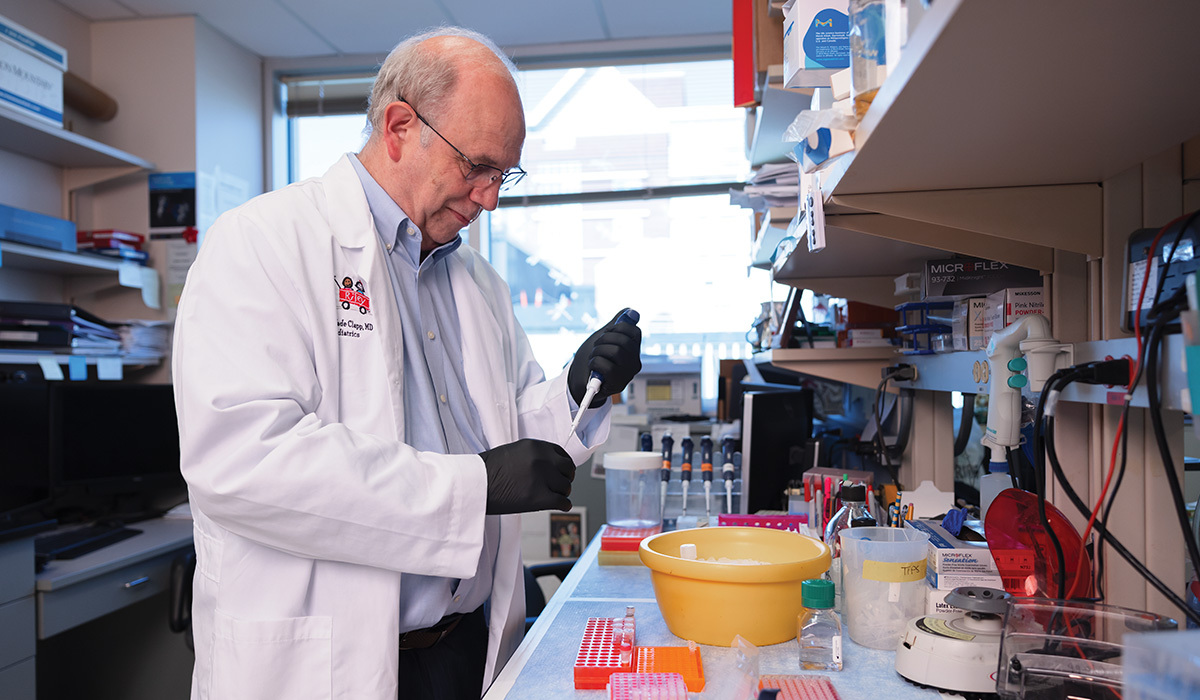
I’m focused on expanding my research lab. We’re working to develop new drugs we think will help with NF1, and we think also other pediatric sarcomas. We’re also developing new technologies to provide better therapies and offer precision medicine much more easily than can be currently done. I’ll also have more time in the early mornings and evenings now. I love to swim, and I should be able to swim five days a week. And if I want to travel to Oregon to see my grandchildren there for a couple of weeks, that can probably be accommodated.
How would you like your legacy to be defined?
That I helped build structures that expand innovation and service, and that those structures are sustained after I’m gone.