Posted at: April 07, 2026
Last Updated: April 07, 2026
Innovation that Strengthens Access and Accuracy at Early Autism Evaluation Hubs
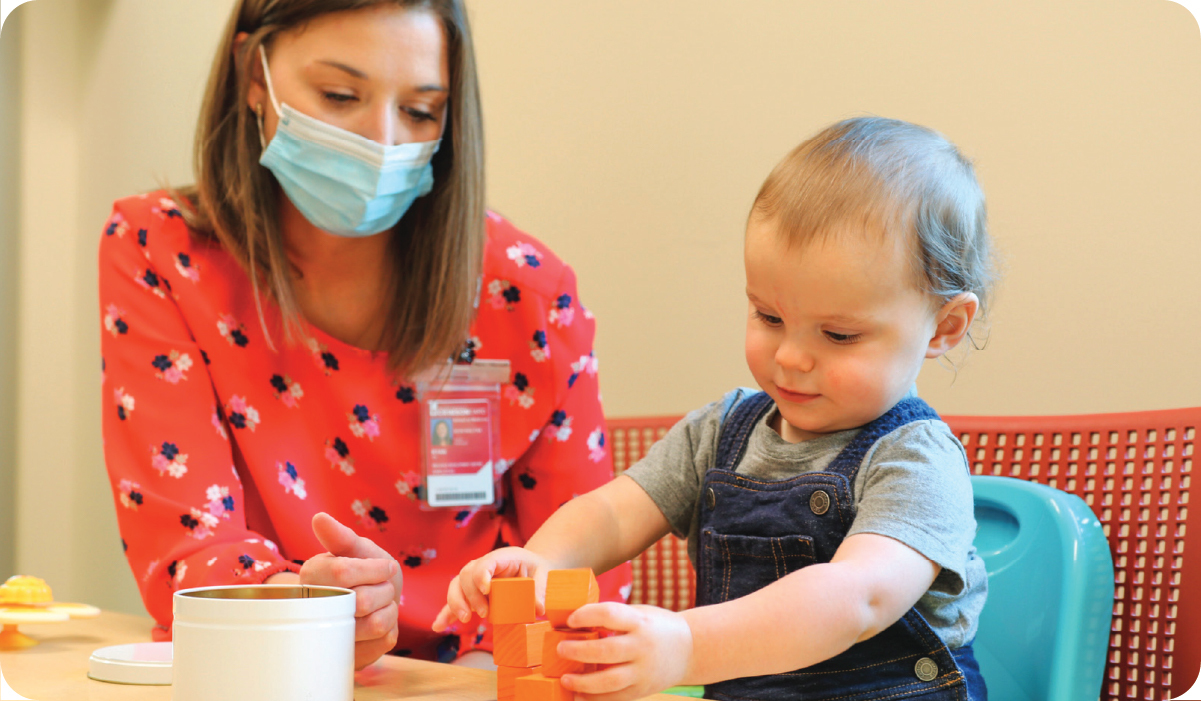
The Early Autism Evaluation (EAE) Hub system, a program of Indiana University School of Medicine established in 2012 and generously supported by Riley Children’s Foundation, is a statewide network of community primary care physicians and clinicians (PCP) with specialized training in autism diagnosis for children 14-48 months of age.
The team behind the Early Autism Evaluation Hub system isn’t just expanding workforce capacity across the state — they are also advancing how autism is identified within primary care settings.
One example is a novel diagnostic model developed by Rebecca McNally Keehn, PhD, Co-Director of the Early Autism Evaluation Hub system, and her team. It combines clinician assessment with advanced eye-tracking technology. During a brief 15-minute assessment in a primary care office, children watch short cartoons in which the child’s natural gaze patterns are measured. These gaze patterns — and related measures such as pupil response — can reveal subtle brain-based differences associated with autism that may not always be visible through behavior alone.
These data points are combined with clinician findings through a decision-support software, providing real-time, point-of-care guidance. The goal is to improve diagnostic accuracy while making the process more scalable — so children can be evaluated earlier, without adding burden to specialty providers.
This commitment to innovation reflects a core philosophy of the Early Autism Evaluation Hub system team: access and excellence must advance together to meet the growing needs of children and families.