
Posted at: December 11, 2025
Last Updated: December 11, 2025
RCF Scholar Spotlight: Lauren Magee, PhD
RCF Scholar Spotlight: Lauren Magee, PhD
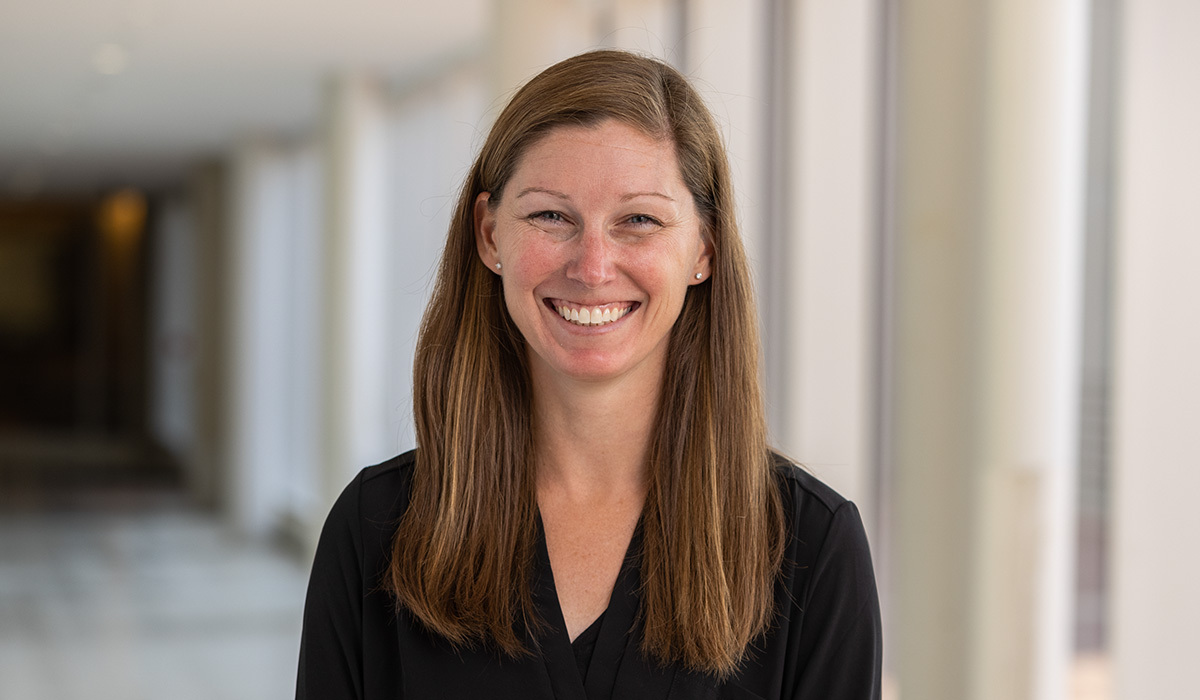
“Research can be conducted outside of the lab, without a white coat,” says Lauren Magee, PhD, a Riley Children’s Foundation Scholar. “Research can happen in the community and take place with community members during their everyday practice.”
RCF Scholars are cutting-edge pediatric faculty in the Indiana University School of Medicine who receive funding for professional development and training, including mentorship and protected time to focus on innovative research projects. With the generous support of Riley Children’s Foundation donors, RCF Scholars will continue to push Riley research to new heights.
Magee’s research focuses on understanding the root causes of pediatric firearm injuries and how to better connect survivors to clinical and social services. Her time as a crime analyst in the Indianapolis Metropolitan Police Department introduced her to many survivors and families, and seeing the enduring impact of violence on their lives pushed her toward research at the intersection of health and justice.
Magee shares that the Indianapolis community experiences an average of 500 non-fatal shootings a year, but there is no national data system for non-fatal shooting injuries. “If you ask me how many pediatric firearm injuries have happened in the state of Indiana right, I actually can’t tell you. We don’t know due to incomplete siloed data systems,” she says. “That’s what drove me back to do a PhD – to understand the research part and how we can build better data infrastructures.” Her work has linked police data with clinical data from emergency rooms to identify who has been shot and survived, as well as develop a more holistic response to support survivors and prevent firearm injuries. “We need more work towards firearm violence from an upstream public health perspective, not just a criminal justice response,” she says.
One initiative that Magee helped create – within IMPD – is an Advocate program for survivors of non-fatal shootings. Traditionally, victim services in the police department are for family members of someone who was lost in a homicide. Now, a team of three advocates calls every non-fatal shooting survivor, asks what they need, and helps connect them to behavioral and social services. Advocates are community members who have been personally impacted by firearm violence. “It’s connection to care that’s needed through a trusted messenger,” says Magee.
Needs shared with advocates range from medical transport due to sustained injuries, to replacing furniture that was damaged in a shooting, to accessing care when survivors are fearful of being in the same community where they were shot. Since the program began in 2022, the team has seen an increase in survivors obtaining emotional services like counseling, and they have also seen a preliminary increase in families’ cases being solved, which provides important closure.
Magee notes that responding to firearm violence has become a priority in Indianapolis – particularly among youth. Supporting research like hers is an opportunity for donors to make a meaningful difference in these efforts. “Research is what drives change,” she says. “Funding allows me to do the research that supports the personal stories that I’ve heard from family members and survivors, as well as put in place new programs that can better support those families that have largely been left unsupported for decades.”
“I do hope to one day wake up and have to change research areas because there is no more firearm violence,” she says. “I do have that hope still that the work will be enough.”
Sign up for our newsletter
Join 140,000 Riley supporters receiving the latest news, updates and uplifting Riley kid stories in their inbox once every week.